by Tony Thomas
December 10, 2013
Tony creates pixel-perfect UI kits & icons. His pug, Wednesday, is Medialoot's beloved mascot.
Web Design Trend Predictions for 2014
In 2013 we have seen the explosion of the ‘flat’ design trend, and more recently the ‘thin’ trend which was undoubtably inspired by the unveiling of iOS 7. Also now that mobile devices are more popular than ever, ‘responsive’ is the buzz word on everybody’s lips! But as this year is almost drawing to a close, many of us are contemplating what the world of web and interface design will hold for us in 2014. Here is my list of the top 6 design trends I think we will be seeing on the horizon.
Continuation of the Flat design trend
 Flat design has been absolutely huge in 2013, it does away with unnecessary textures, gradients and other remnants of the web 2.0 era. And the trend will no doubt continue into next year, as flat design will also start to evolve and mature. Gimmicks such as the much overused long shadow effect will start to make way for more refined and considered minimalist design.
Simplicity has and always will be a key part of any field of design. Flat design (although slightly gimmicky now) is actually just another word for simplicity, and it will become an even bigger part of web and interface design in 2014.
More sites will be coded in HTML5 & CSS3
Thankfully, the days of dreading how your website design will look in different browsers, especially Internet Explorer are fading away. Most modern web browsers now support HTML5 and CSS3 so it is time for designers and developers to make the most of this! Even simple things such as CSS3 Transitions will become more popular. And coding with HTML5 will make websites more semantically correct.Responsive design and planning for mobile
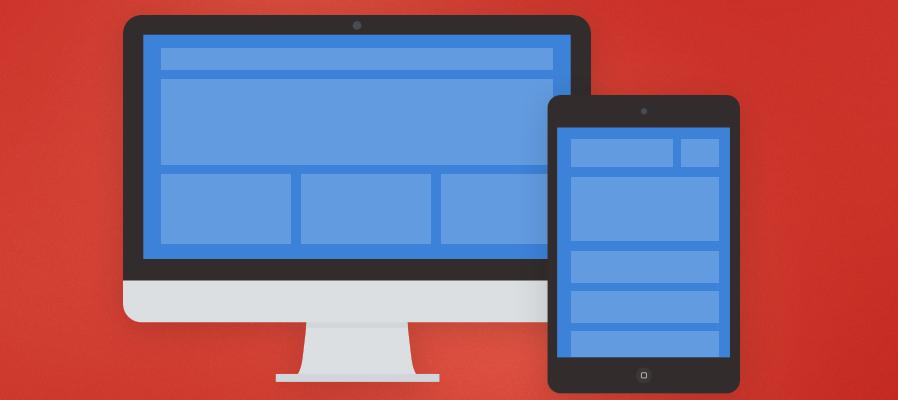 Okay, so responsive design is clearly nothing new. But most websites are still designed and built for larger full-size screens first, and then almost as an after-thought it is figured out how to make the design collapse into a more condensed layout for mobile devices.
In 2014 we should see a shift from this mindset, maybe not quite as far as designing for mobile first as some suggest. But at least designing for both at the same time. This will probably mean much more time spent in the planning stages and wire-framing design concepts.
Layout inspiration from print
As the web evolves and matures as a format for design, it is already beginning to focus more on traditional design considerations that exist in the print industry. Thanks to CSS @fontface embedding and web font services, designers have the freedom to use non-standard typefaces. And craft beautiful typography that speaks for itself. We will also see minimalism, simplicity and clever use of white space which like that which is used heavily in magazine layouts to emphasise the content.Long pages and parallax trend
 Websites that want to visually impress are starting to use long vertical single page designs and funky effects such as parallax.js to encourage users to keep scrolling on down and reading more. Key page elements such as social media, navigation links and back to top buttons go ‘sticky’ and follow you down the page!
Long single page designs are ideal for smaller websites that have sections such as ‘About us’ ‘Services’ ‘Portfolio’ and ‘Contact us’. Traditionally each section would have it’s own page. But in 2014 we will see more and more of these sites unifying their website to a single page.